ASME Air Receiver Tank Supplier – Divya Engineers Private Limited
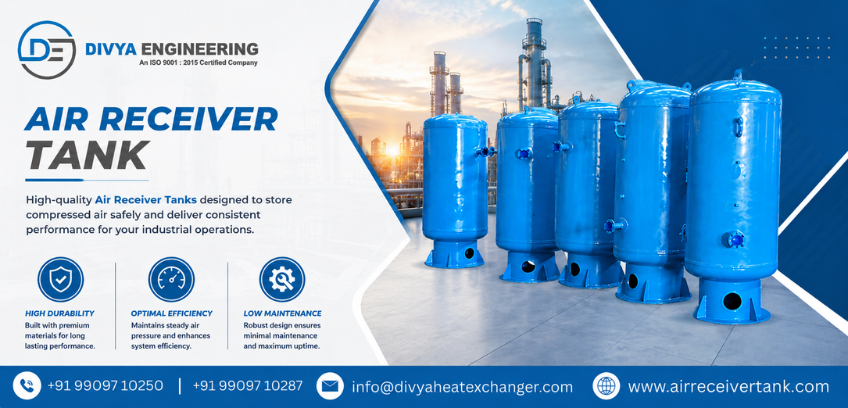
When compressed air systems operate continuously, reliable storage and pressure management become essential for maintaining productivity. An ASME Air Receiver Tank Supplier provides pressure vessels designed to store compressed air and support stable operation across industrial applications. Divya Engineers Private Limited manufactures air receivers and other pressure equipment, offering engineered solutions for industries that require dependable performance, durable construction, and consistent quality. The company has more than 18 years of industrial experience and manufactures air receivers, nitrogen tanks, chemical tanks, and related pressure equipment.
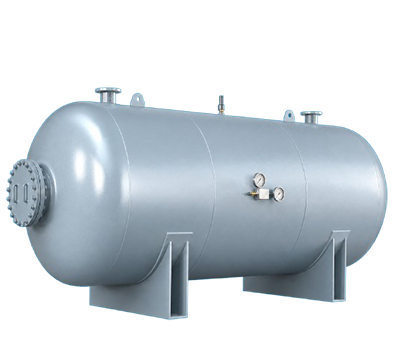
An Air Receiver Tank acts as a buffer between the compressor and the compressed-air network. It stores air during periods of lower consumption and helps supply additional air during short-term demand increases. A correctly designed receiver can therefore contribute to stable pressure, smoother operation, and better compressor utilization.
Why Choose an ASME Air Receiver Tank Supplier?
ASME Section VIII provides rules for the construction of pressure vessels, covering areas such as design, materials, fabrication, examination, inspection, testing, and certification. ASME explains that Section VIII, Division 1 applies to pressure vessels operating above 15 psig internal or external pressure.
For buyers, choosing an experienced Air Receiver Tank Supplier is therefore about more than purchasing a storage vessel. The supplier should understand pressure-vessel engineering, material requirements, welding, inspection, testing, documentation, and the specific operating conditions of the customer.
Divya Engineers Private Limited focuses on engineered pressure and heat-transfer equipment and states that its products are manufactured using premium materials and tested to meet national and international quality standards.
Best ASME Air Receiver Tank Supplier for Industrial Applications
A Best ASME Air Receiver Tank Supplier should be able to provide solutions according to the plant's compressor capacity, working pressure, air consumption, installation space, and application requirements.
ASME-compliant pressure-vessel work involves considerably more than simply forming and welding a tank. Depending on the applicable code requirements, factors such as material specifications, weld-joint efficiency, inspection, testing, design calculations, and documentation need careful consideration. ASME's official documentation includes manufacturer data reports identifying the vessel type, materials, thicknesses, joints, heat treatment, and applicable Section VIII requirements.
This makes technical communication between the buyer and manufacturer especially important before manufacturing begins.
Key Features of an ASME Air Receiver Tank
A quality Air Receiver Tank should be designed around the actual compressed-air system rather than selected only on tank volume.
Important features may include:
Robust pressure-resistant construction
Vertical or horizontal configuration
Capacity according to application requirements
Suitable material grade and thickness
Precisely fabricated shell and dished ends
Properly designed inlet and outlet nozzles
Pressure gauge connection
Safety or relief valve provision
Drain connection for condensate removal
Corrosion protection and suitable surface finishing
Inspection and testing according to applicable requirements
Documentation and traceability where required
The final configuration should always be based on the approved technical specification and applicable pressure-vessel requirements.
Top ASME Air Receiver Tank Supplier for Major Indian Cities
Industrial demand for compressed-air equipment is strong across India's manufacturing and processing hubs. Divya Engineers Private Limited can cater to requirements from major industrial locations, including:
Ahmedabad, Vadodara, Surat, Rajkot, Bharuch, Ankleshwar, Vapi, Mumbai, Pune, Nashik, Nagpur, Delhi, Noida, Gurugram, Faridabad, Jaipur, Indore, Bhopal, Hyderabad, Bengaluru, Chennai, Coimbatore, Hosur, Kolkata, Bhubaneswar, Visakhapatnam, and Chandigarh.
For customers searching for a Top ASME Air Receiver Tank Supplier, selecting a manufacturer with suitable production capabilities, engineering knowledge, quality practices, and delivery support can make procurement easier for both new projects and replacement requirements.
Buy ASME Air Receiver Tank for Your Compressed Air System
Before you Buy ASME Air Receiver Tank, provide the manufacturer with complete technical information. This helps avoid incorrect sizing and ensures that the proposed vessel is appropriate for the intended operating conditions.
Useful details include:
Required tank capacity
Working and design pressure
Compressor capacity
Operating temperature
Vertical or horizontal preference
Material requirements
Nozzle and connection details
Installation conditions
Required inspection or certification
Quantity and delivery location
A professional manufacturer can then evaluate the requirements and recommend a suitable design.
ASME Air Receiver Tank Price – What Determines the Cost?
The ASME Air Receiver Tank Price cannot be accurately determined from capacity alone. The final quotation can depend on the pressure rating, material, dimensions, wall thickness, vessel configuration, nozzle arrangement, testing requirements, surface treatment, documentation, and quantity.
ASME-related design and certification requirements can also influence engineering, inspection, testing, and documentation costs. Section VIII contains detailed requirements for pressure-vessel construction, and Division 2 introduces more rigorous requirements for materials, design, and nondestructive examination.
For this reason, buyers should compare quotations on technical specifications and quality—not simply the lowest price.
ASME Air Receiver Tank Manufacturer Focused on Quality
As an ASME Air Receiver Tank Manufacturer, quality control should begin with material selection and continue through fabrication, welding, inspection, testing, finishing, and final documentation.
Divya Engineers Private Limited emphasizes engineered manufacturing and quality materials across its pressure-equipment range.
Quality Factors to Consider
When evaluating a supplier, ask about:
Material certificates and traceability
Welding procedures and qualified personnel
Dimensional inspection
Non-destructive examination where applicable
Pressure testing
Safety-device provisions
Surface preparation and coating
Technical drawings
Inspection and test documentation
These considerations can help buyers select equipment that is appropriate for demanding industrial environments.
ASME Air Receiver Tank Exporter for Global Requirements
An ASME Air Receiver Tank Exporter needs to manage more than manufacturing. International projects may involve customer-specific technical specifications, inspection requirements, documentation, packaging, and transportation arrangements.
Divya Engineers Private Limited offers pressure equipment for industrial requirements and has a product portfolio that includes air receivers and other process vessels.
For export projects, customers should communicate the destination country's regulatory requirements and project specifications before production so the technical and documentation scope can be established clearly.
Maintenance and Safe Operation
Even a high-quality receiver requires appropriate maintenance. Condensate should be drained regularly, while pressure gauges, safety devices, connections, and external surfaces should be inspected according to the manufacturer's recommendations and applicable regulations.
Operators should never exceed the vessel's specified allowable pressure. Periodic inspection should also be performed according to the applicable statutory and maintenance requirements.
FAQs About ASME Air Receiver Tanks
ASME refers to the American Society of Mechanical Engineers and its Boiler and Pressure Vessel Code. Section VIII contains rules for pressure-vessel construction.
Selection depends on compressor capacity, working pressure, air demand, operating cycles, and system requirements. A qualified manufacturer can help determine an appropriate configuration.
Yes. Divya Engineers Private Limited specializes in engineered pressure equipment and manufactures air receivers according to industrial requirements.
They are widely used in manufacturing, engineering, pharmaceuticals, chemicals, automotive, textiles, food processing, and other industries using compressed air.
Customers looking for an ASME Air Receiver Tank Supplier Near Me can contact Divya Engineers Private Limited in Ahmedabad for technical discussions, customized requirements, quotations, and delivery options.
Divya Engineers Private Limited brings more than 18 years of experience in manufacturing pressure and heat-transfer equipment. Its product portfolio includes air receivers, nitrogen tanks, chemical tanks, liquid tanks, filtration equipment, heat exchangers, condensers, and other industrial solutions.
For businesses looking for an ASME Air Receiver Tank Supplier, the company offers an engineering-focused approach, quality-conscious manufacturing, customized solutions, and support for industrial requirements.
Looking for a dependable ASME air receiver for your plant? Contact Divya Engineers Private Limited today. Share your required capacity, working pressure, material, application, quantity, and delivery location to receive a suitable technical recommendation and quotation.