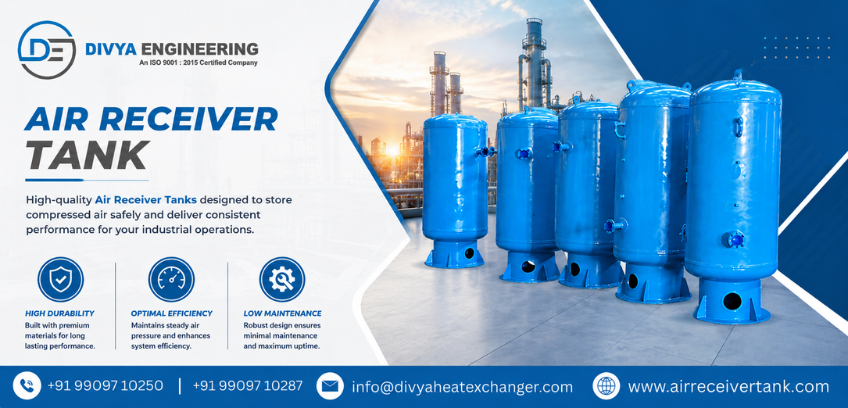
ASME Air Receiver Tank Exporter – Divya Engineers Private Limited
When industries depend on compressed air for continuous production, a reliable storage system is essential for maintaining stable pressure and efficient operations. An ASME Air Receiver Tank Exporter provides pressure storage equipment designed around demanding industrial requirements, helping businesses manage compressed-air fluctuations, reduce unnecessary compressor cycling, and support dependable plant performance.
Divya Engineers Private Limited focuses on engineered pressure-vessel solutions for industrial applications. For buyers looking for an Air Receiver Tank, selecting a supplier with strong engineering practices, quality-focused fabrication, appropriate inspection, and export experience is important. ASME Section VIII covers requirements related to pressure-vessel design, fabrication, inspection, testing, and certification, making code compliance an important consideration for qualifying applications.
Why Choose an ASME Air Receiver Tank Exporter?
An air receiver tank acts as a buffer between the compressor and the compressed-air distribution system. It stores compressed air and helps meet short-term demand without requiring the compressor to respond to every pressure fluctuation.
For international projects, buyers often require equipment manufactured according to recognized pressure-vessel standards. Working with an experienced Air Receiver Tank Exporter can simplify specifications, documentation, packaging, and international dispatch requirements.
A properly engineered receiver can help:
Stabilize compressed-air pressure
Handle peak air demand
Reduce frequent compressor loading and unloading
Improve compressor operating efficiency
Collect moisture and contaminants for controlled drainage
Provide reserve air during short periods of high demand
ASME Section VIII, Division 1 applies to pressure vessels operating above 15 psig and addresses design, fabrication, inspection, testing, and certification requirements.
Key Features of an ASME Air Receiver Tank Exporter Solution
A high-quality receiver should be selected according to the actual application rather than simply choosing a standard tank size. Capacity, operating pressure, temperature, material, corrosion allowance, connection requirements, installation position, and applicable codes should all be considered.
Important Features
Robust pressure-retaining construction
Engineered shell and dished-head configuration
Suitable nozzles and process connections
Pressure gauge and safety/relief arrangement as required
Drain connection for moisture removal
Corrosion protection and suitable surface finishing
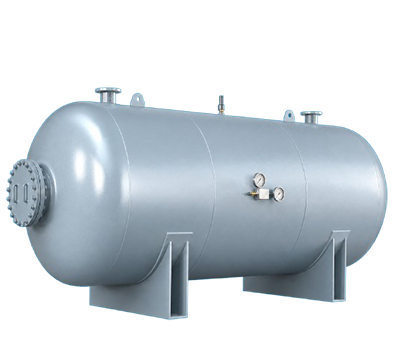
Horizontal or vertical configurations
Custom dimensions and capacities for project requirements
Inspection and testing documentation as applicable
Safety accessories are particularly important. Industry safety guidance for air receivers emphasizes pressure gauges, properly adjusted relief valves, and drainage arrangements for accumulated moisture, oil, and dirt.
Quality Standards That Matter
Quality in pressure-vessel manufacturing involves much more than visual appearance. Material selection, welding quality, dimensional accuracy, inspection, testing, and traceability can all influence the reliability of the finished equipment.
A responsible ASME Air Receiver Tank Manufacturer should establish suitable controls throughout the manufacturing process. Depending on the applicable design and certification requirements, this can include material verification, qualified welding procedures, weld examination, dimensional inspection, pressure testing, and preparation of required documentation.
ASME's Section VIII framework includes requirements covering materials, fabrication, welding, examination, pressure testing, overpressure protection, data reports, and stamping.
For buyers, this means the right ASME Air Receiver Tank Supplier should be able to understand the technical specification before quoting and clearly communicate what standards, inspections, tests, and documentation are included.
How to Choose the Best ASME Air Receiver Tank Exporter
Choosing the Best ASME Air Receiver Tank Exporter should not be based only on the lowest quotation. Buyers should evaluate engineering capability, manufacturing controls, product customization, inspection practices, documentation, delivery capability, and after-sales support.
Before placing an order, ask:
What is the required working pressure?
What capacity is suitable for the compressor and application?
Is the vessel required in horizontal or vertical configuration?
What material and corrosion allowance are specified?
Which ASME edition, division, and certification requirements apply?
What inspection and testing documentation will be supplied?
Are accessories and fittings included?
What export packaging and delivery arrangements are available?
These questions can help industrial buyers compare suppliers more effectively and avoid selecting equipment that does not match their project requirements.
Why Divya Engineers Private Limited?
Divya Engineers Private Limited aims to support industrial buyers with practical and application-oriented pressure-vessel solutions. Customers can discuss their capacity, pressure, dimensions, material, connection, installation, and project requirements before finalizing their equipment specification.
For companies seeking a Top ASME Air Receiver Tank Exporter, the focus should be on dependable engineering, consistent manufacturing quality, transparent technical communication, and project-specific support rather than marketing claims alone.
Whether you need equipment for manufacturing, engineering, process plants, utilities, automotive operations, pharmaceuticals, food processing, or other compressed-air applications, a correctly specified receiver can become an important part of the overall air system.
ASME Air Receiver Tank Price – What Determines the Cost?
The ASME Air Receiver Tank Price depends on several technical and commercial factors. Capacity and working pressure are major considerations, while material grade, vessel dimensions, thickness, corrosion allowance, design requirements, accessories, inspection, certification, surface treatment, customization, and shipping can also affect the final quotation.
Instead of comparing prices only by tank capacity, buyers should compare the complete scope of supply. A lower initial price may not represent better value if important accessories, inspections, documentation, or project-specific requirements are excluded.
Buy ASME Air Receiver Tank for Your Industrial Application
If you plan to Buy ASME Air Receiver Tank equipment for a new plant, capacity expansion, replacement project, or export application, begin with a clear technical specification. Providing the required capacity, working pressure, temperature, orientation, material preference, design standard, destination, and accessories will help the supplier prepare a more accurate proposal.
Top Cities of India We Serve
Industrial buyers across major Indian manufacturing hubs can explore pressure-vessel solutions, including Ahmedabad, Vadodara, Surat, Mumbai, Pune, Nashik, Rajkot, Delhi, Noida, Gurugram, Chennai, Bengaluru, Hyderabad, Coimbatore, Kolkata, Jaipur, Indore, and Nagpur.
For customers searching online for an ASME Air Receiver Tank Exporter Near Me, geographic distance should not be the only deciding factor. Engineering capability, applicable certification, quality controls, documentation, logistics, and technical support are equally important.
FAQs
An air receiver tank is a pressure vessel used to store compressed air and provide a buffer between the compressor and downstream demand.
ASME Section VIII establishes requirements for pressure-vessel design and construction, including areas such as materials, fabrication, examination, testing, and certification.
Capacity should be determined from compressor output, operating pressure, demand pattern, required reserve, installation conditions, and the applicable engineering design.
Yes. Depending on the project, receivers can be specified with different capacities, pressures, orientations, dimensions, connections, materials, and accessories.
Share your required capacity, working pressure, application, preferred configuration, destination, and applicable standards with Divya Engineers Private Limited. The technical team can then review your requirements and provide a suitable proposal.
Choose the Right ASME Air Receiver Tank Exporter for Your Project
A dependable compressed-air system starts with correctly engineered equipment. From pressure storage and peak-demand management to safety, inspection, and long-term reliability, the right receiver can contribute significantly to efficient plant operation.
Divya Engineers Private Limited welcomes industrial buyers, project contractors, EPC companies, and international customers looking for professionally engineered pressure-vessel solutions. Contact Divya Engineers Private Limited today with your technical requirements and discuss the right air receiver tank solution for your application.