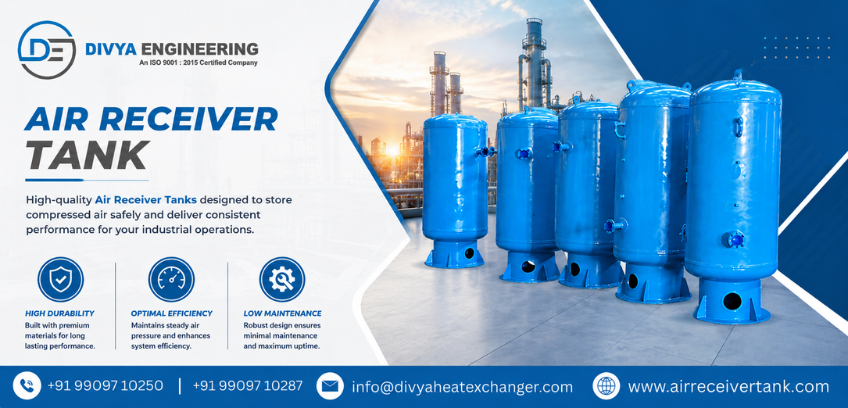
Air Receiver Tank Price – Divya Engineers Private Limited
When industries invest in a compressed air system, choosing the right storage vessel is just as important as selecting the compressor. The Air Receiver Tank Price depends on several factors, including tank capacity, working pressure, material, design, testing, accessories, and customization. A properly selected Air Receiver Tank stores compressed air, reduces pressure fluctuations, supports peak demand, and can help improve overall compressor performance. Indian Standard IS 7938 covers air receivers for compressed-air installations, with the current revision extending its scope to design pressures up to 25 bar.
For businesses comparing suppliers, the goal should not simply be to find the lowest quotation. The right tank should offer dependable construction, appropriate pressure ratings, effective corrosion protection, safety provisions, and long-term value.
What Determines the Air Receiver Tank Price?
The Air Receiver Tank Price is not a fixed figure because every industrial application can have different requirements. Capacity is one of the biggest factors. A small receiver suitable for a compact compressor installation will naturally cost less than a large-capacity vessel designed for continuous industrial operation.
Other important pricing factors include:
Tank capacity: Larger storage volume generally requires more material and fabrication.
Working pressure: Higher-pressure vessels require suitable materials, thickness, welding, and testing.
Material: Mild steel is commonly selected for industrial applications, while stainless steel may be preferred for specific environments.
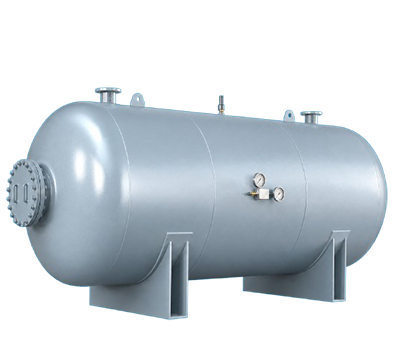
Orientation: Vertical and horizontal configurations can have different fabrication and installation requirements.
Surface protection: Internal and external coatings can improve resistance against corrosion.
Accessories: Pressure gauges, safety valves, drain arrangements, and other fittings influence the final quotation.
Inspection and testing: Pressure testing, documentation, and applicable certification requirements contribute to project cost.
Current Indian marketplace listings show that quoted prices vary substantially by capacity and specification, which demonstrates why comparing only the tank price without checking specifications can be misleading.
Why an Air Receiver Tank Is Important
An Air Receiver Tank acts as a buffer between the compressor and the points where compressed air is consumed. It stores compressed air and helps meet short-duration demand without requiring the compressor to respond instantly to every fluctuation.
A properly sized receiver can also help reduce frequent compressor cycling and stabilize system pressure. It may allow moisture and condensate to separate from the compressed air before downstream equipment, although appropriate dryers, filters, and drainage arrangements remain important.
For industrial plants, this means more consistent pneumatic operation and potentially better control over energy consumption and equipment loading.
Features to Look for Before Buying
Before evaluating an Air Receiver Tank Price, buyers should examine the complete technical specification rather than focusing only on the quoted amount.
Essential Features
A quality receiver should include:
Strong pressure-vessel construction
Properly designed shell and dished ends
Suitable working and design pressure
Pressure gauge
Safety relief valve
Manual or automatic drain arrangement
Proper inlet and outlet connections
Corrosion-resistant surface treatment
Accessible inspection openings where required
Proper supports for safe installation
Hydrostatic or other required pressure testing
Relevant inspection and manufacturing documentation
IS 7938 specifies requirements concerning receiver construction, hydraulic testing, installation, surface protection, and marking. Safety provisions such as pressure-relief devices and drainage are also fundamental to responsible pressure-vessel operation.
Quality Matters More Than the Lowest Quote
When comparing the Air Receiver Tank Price, quality should always remain a priority. A pressure vessel operates under demanding conditions, so fabrication quality, material selection, welding, inspection, and testing directly influence reliability.
Divya Engineers Private Limited focuses on supplying industrial equipment with attention to engineering requirements and application needs. Buyers should discuss compressor capacity, operating pressure, required storage volume, installation conditions, material preference, and applicable standards before finalizing a receiver.
A good supplier should also be able to provide relevant technical documents and test records as required for the project. This makes procurement more transparent and helps plant operators maintain proper equipment records.
Air Receiver Tank Price Manufacturer – What to Check
Selecting an Air Receiver Tank Price Manufacturer should involve more than comparing two quotations. Check the manufacturer's experience with pressure vessels, fabrication capabilities, quality-control procedures, testing facilities, customization options, and documentation practices.
The manufacturer should understand that receiver sizing and pressure specifications must correspond to the compressed-air system. Current Indian guidance and standards emphasize sound engineering, appropriate design, testing, and safe operation of pressure equipment.
Choosing an Air Receiver Tank Price Supplier
A dependable Air Receiver Tank Price Supplier should provide clear specifications instead of offering a generic price. Ask for capacity, working pressure, design pressure, material grade, dimensions, orientation, accessories, testing details, delivery schedule, and warranty terms.
This approach helps industrial buyers compare quotations on an equal basis and prevents unexpected costs after the purchase order.
For export requirements, selecting an Air Receiver Tank Price Exporter with experience in technical documentation, packaging, inspection, and destination-country requirements can make international procurement smoother.
How to Get the Best Value
Companies looking for the Best Air Receiver Tank Price should evaluate total ownership value rather than simply choosing the cheapest tank. A well-designed receiver can provide dependable service for years when properly installed, drained, inspected, and maintained.
Likewise, buyers searching for the Top Air Receiver Tank Price should compare engineering quality, safety provisions, customization, after-sales support, and documentation along with the initial quotation.
If you want to Buy Air Receiver Tank Price options for your plant, provide your required capacity, working pressure, compressor output, preferred material, and installation orientation. A supplier can then prepare a more accurate application-based quotation.
FAQs About Air Receiver Tank Price
Capacity, working pressure, material, dimensions, fabrication requirements, testing, accessories, coating, and certification requirements are among the major factors.
Receiver capacity should be selected according to compressor output, operating pressure, demand pattern, and whether the receiver is intended mainly for buffering or additional air storage. IS 7938 provides guidance for sizing compressed-air receivers.
Not necessarily. The correct tank is one that meets the application's engineering, safety, capacity, and pressure requirements. An unnecessarily oversized or highly customized vessel may increase cost without providing proportional benefits.
They help monitor operating pressure and provide protection against excessive pressure. Appropriate safety devices are an essential part of pressure-vessel operation.
This is often a repeated search phrase used by buyers looking for current quotations. The actual quotation should always be based on specific technical requirements rather than a generic online price.
Request quotations from experienced manufacturers and compare capacity, pressure rating, material, testing, accessories, documentation, warranty, and delivery—not just the headline price.
Search locally for established industrial pressure-vessel manufacturers or suppliers, then verify their manufacturing capability, technical specifications, testing procedures, and service support before purchasing.
Get the Right Air Receiver Tank for Your Application
Choosing the right receiver is an investment in compressed-air system stability, safety, and long-term performance. Instead of selecting equipment solely on the quoted Air Receiver Tank Price, consider engineering quality, pressure rating, capacity, materials, testing, safety accessories, and after-sales support.
Divya Engineers Private Limited can help industrial buyers evaluate receiver requirements and select a suitable solution for their compressed-air application. Share your required capacity, working pressure, compressor details, and installation preference to discuss the right configuration and request a competitive quotation today.